


Third-party cookies are fading (it wouldn’t hurt to say has faded even). How brands can collect and use user data has become more regulated, strict, and privacy-bound. No more relying on JavaScript snippets. Marketers are now collecting user data that is consented to and directly from the end-users. Now, they have cleaner data that actually adds value to the marketing campaigns. A first-party data strategy is the way forward, especially if you are aiming for long-term business growth.
Research shows that 84% of marketers list first-party/transactional/customer data as their top data sources. Despite this high usage, only 31% of marketers say they are fully satisfied with their ability to unify customer data sources.
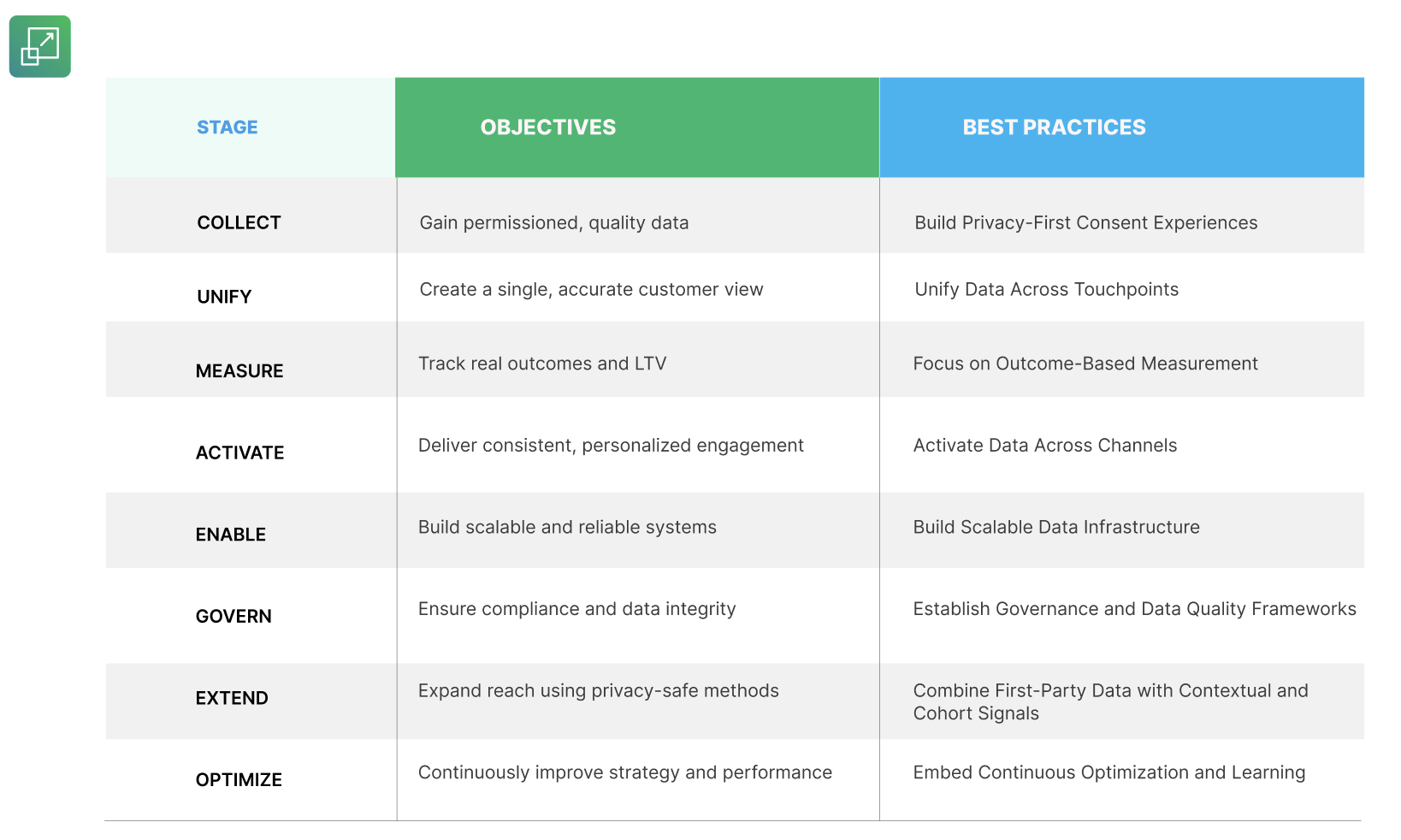
So how can marketing teams turn first-party data from a ‘nice to have’ into a high-performing asset? This article lays out the statistics that drive urgency, then walks you through eight best practices, each backed by real use cases, that you can implement today.
First-party Data Strategy: Adoption State 2025
We know how essential first-party data tracking is. We have been tracking the changes in the global market for some time, and it is obvious that first-party data and server-side tracking in the current (and future) needs. There is no way out anymore.
Global marketers are in the middle of a fast-moving transition from reliance on third-party identifiers to owning the customer relationship through first-party data. While the adoption is high, the capability shortfalls are common. For instance, many organizations collect data yet struggle to unify and activate it effectively.
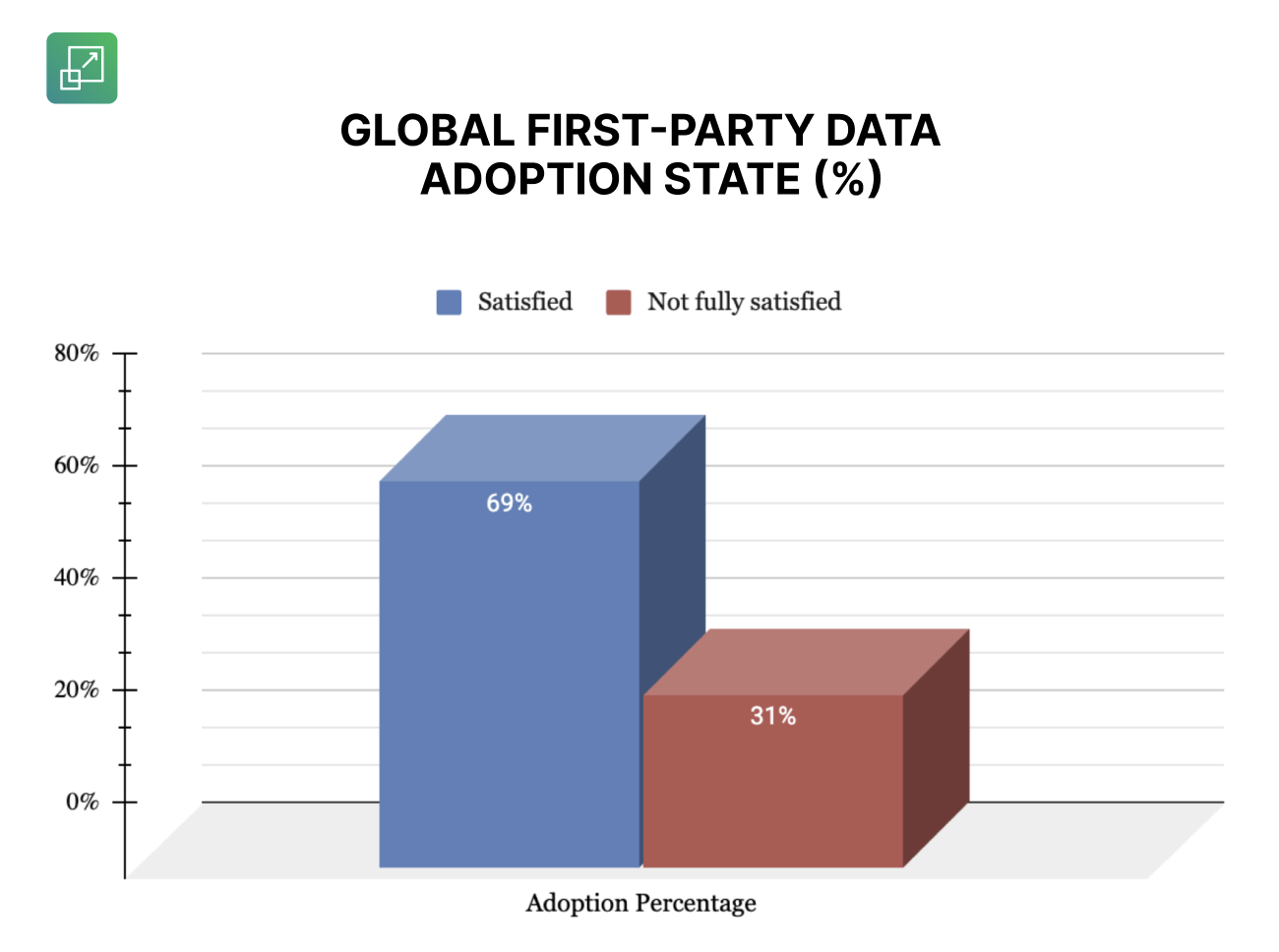
This gap between collection and operationalism has created an urgency for practices that will teach brands to reliably capture, stitch, and act on first-party signals.
At ScaleX, we offer customized solutions and enable brands like you to capture first-party data, store them securely, and understand first-party signals. With us, you get clearer measurememts, stronger personalization, and more predictable ROI. We do more than this. Connect with us now for more details.
First-party Data Adoption: India Market State
From a technology and measurement perspective, the playbook is changing. Server-side event collection, customer data platforms (CDPs), identity resolution, and consent management are now core elements of modern martech stacks. They solve concrete problems such as lossy client-side capture, fragmented profiles, and compliance risk. The CDP market itself is scaling rapidly as companies seek a single place to unify profiles and push segments into activation systems; analysts forecast strong multi-year growth as marketers prioritise owned data infrastructure.
The Indian market is one of the most dynamic markets because it both intensifies the opportunity and raises unique operational needs. Digital ad spend in India has been growing faster than in many mature markets. In the recent reporting cycles, digital surpassed television to become the largest share of advertising spend – a shift that magnifies the value of first-party signals collected on mobile apps, eCommerce platforms, and social properties.
That said, India also presents practical challenges that shape strategy. Factors like high device churn, a larger proportion of non-logged-in mobile users, and significant offline transaction volumes in many categories play a pivotal role in how brands are adopting and implementing a first-party data strategy.
For many Indian marketers, the immediate wins are tactical. These include raising the percentage of sessions with an identifiable customer, improving match rates between offline purchases and online profiles, and using cohort or contextual methods to supplement individual identifiers where login rates are low. When combined with strong governance, these tactics unlock both short-term performance and long-term customer value.
What does this mean for marketers?
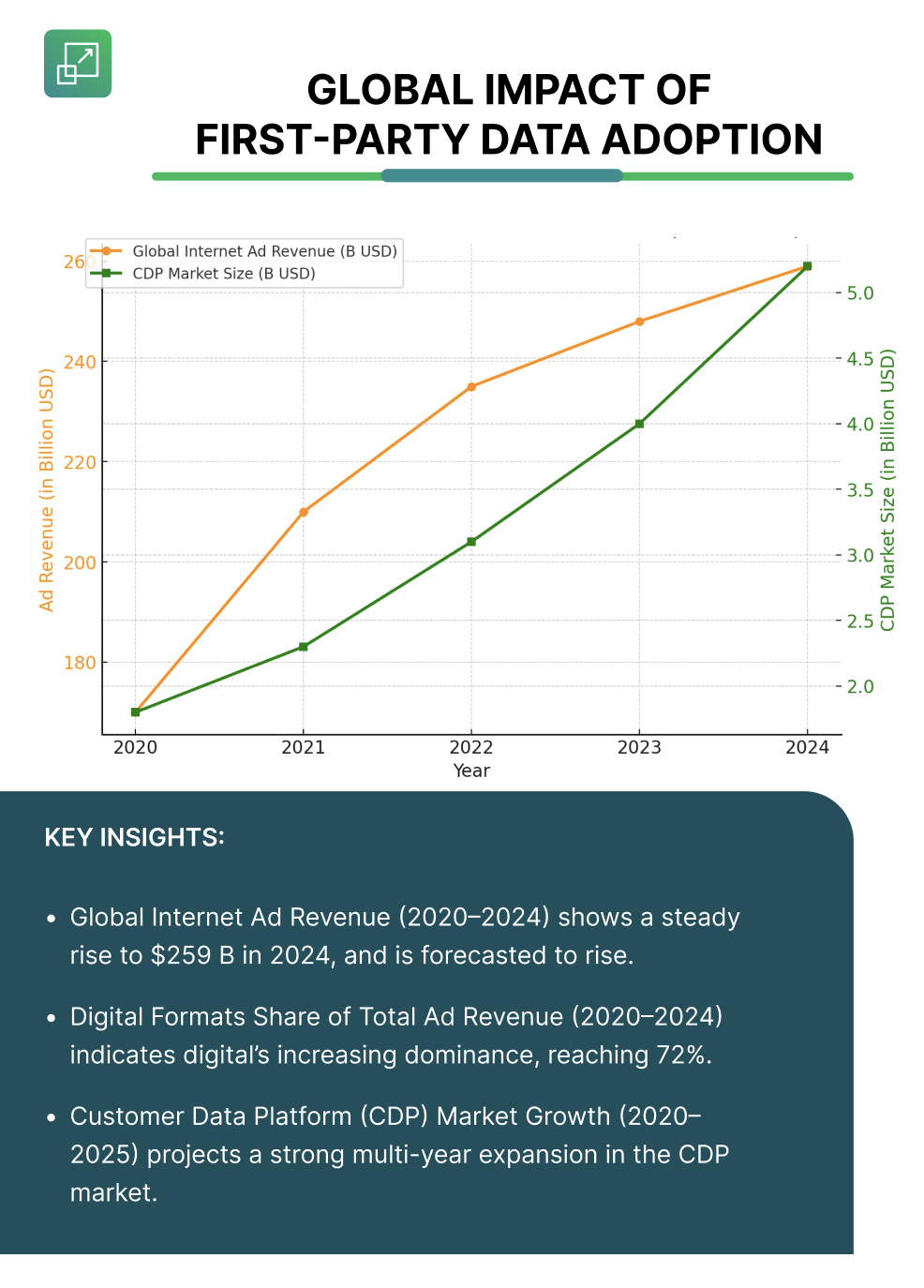
The global numbers on first-party data adoption are as follows:
- Global internet advertising revenue reached $59 billion in 2024.
- Digital formats accounted for a large and growing share of ad revenue, wherein digital formats were ~72% of overall ad revenue in 2024 and is forecast to rise further.
- The Customer Data Platform market is growing rapidly; analysts project the market to expand strongly over the next several years (multi-billion USD market with high CAGR).
Key takeaways:
- Prioritise the highest-impact use cases (e.g., onboarding, abandonment recovery, loyalty) and instrument them with reliable first-party capture and measurement before scaling. This converts investment into proof points.
- Treat identity & unification as product problems: appoint data owners, measure match-rates, and track the percent of sessions that map to an identifiable profile. The global readiness gap shows this is where many programs stall.
- Invest in privacy-first infrastructure: CDPs, consent management, server-side tagging, and secure activation paths (APIs and clean rooms) will be increasingly non-negotiable as digital budgets concentrate and regulators tighten.
First-party Data Strategy: Best Practices to Implement Now
We have discussed the current gap in how marketers are handling first-party data. Here are expert-confirmed best practices to implement a first-party data strategy.
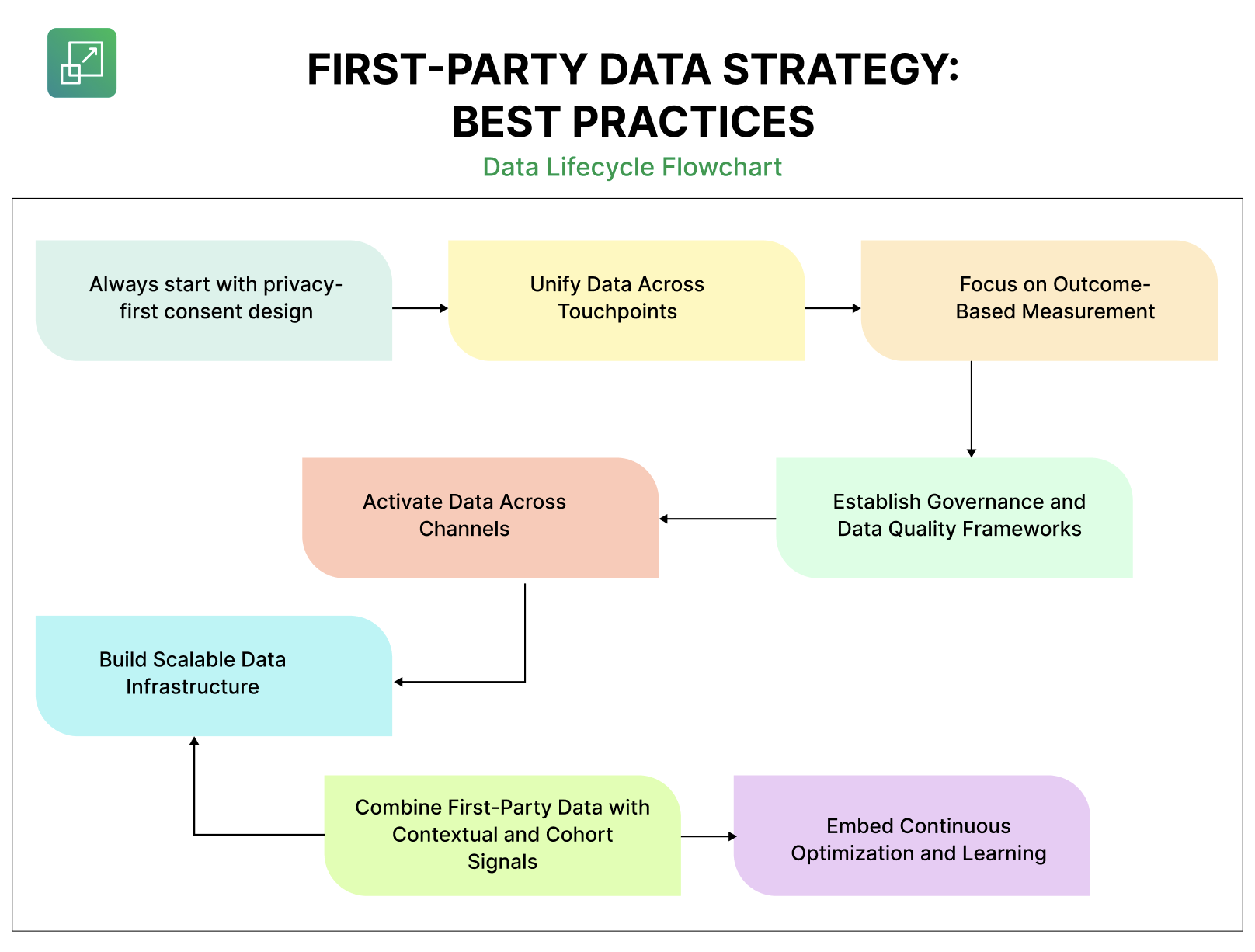
1. Always start with privacy-first consent design
Consent is no longer just a compliance box to tick. It’s the opening handshake in the customer relationship. Globally, consumers are becoming more privacy-aware, and regulations like GDPR, CCPA, and India’s DPDP Act reflect this shift. Brands that embed privacy-first consent experiences within their design build lasting credibility and higher opt-in rates.
Instead of vague “accept cookies” pop-ups, create contextual consent flows that clearly articulate the value exchange: tell users what they gain in return for data sharing. Personalized experiences, faster checkouts, and relevant product recommendations are all tangible incentives that motivate opt-ins. Layered consent frameworks let users choose what to share — from email updates to location data — giving them a sense of control and ownership.
Best practices:
- Use transparent, benefit-oriented language in consent prompts.
- Offer tiered consent options (e.g., “essential cookies,” “personalization,” “offers and insights”).
- Store consent metadata centrally to maintain audit trails.
- Provide frictionless ways to modify or withdraw consent.
Example:
An eCommerce retailer redesigns its cookie banner to highlight clear benefits: “We use your browsing data to suggest better deals and restock alerts.” Within a month, opt-in rates increase by 22%, and session durations rise by 15%. The same model applies across sectors, such as insurance portals, travel aggregators, and B2B software providers can all use value-based transparency to improve consent quality.
2. Unify Data Across Touchpoints
Data unification is the heart of a first-party strategy. Most organizations collect data from multiple sources, such as websites, apps, offline events, and CRM systems, yet fail to link these fragments into a cohesive customer identity. The result is disjointed messaging and inconsistent personalization.
A unified customer profile solves this by integrating all identifiers and interactions into a single, 360-degree view. This foundation allows teams to track behavior, predict intent, and personalize experiences consistently across channels. Whether you use a Customer Data Platform (CDP), data warehouse, or API-based integrations, the goal is the same: a central “source of truth” for each customer.
Best practices:
- Consolidate data from all relevant systems into unified IDs.
- Standardize naming conventions and maintain consistent taxonomies.
- Schedule regular data synchronization between marketing, sales, and support tools.
- Track completeness and match-rate KPIs to ensure integrity.
Example:
A leading eCommerce brand connects data from its app, website, point-of-sale (POS), and loyalty program into one customer profile. Now, when a user buys shoes in-store, they instantly receive an online discount for complementary products. This connected journey boosts cross-channel sales by 18%. Similar benefits apply to banking, telecom, and retail, wherever fragmented systems obscure customer context.
3. Focus on Outcome-Based Measurement
The era of cookie-based attribution is ending. Marketers who still depend on click-through rates or pixel data are often flying blind. The smarter path forward is outcome-based measurement, which ties marketing actions to tangible results: conversions, repeat purchases, retention, and lifetime value (LTV).
This requires stronger reliance on first-party data, as owned identifiers make it possible to track behavior across sessions and devices. Server-side tagging improves data reliability, while incrementality testing and holdout experiments isolate the real contribution of marketing touchpoints. The shift moves analytics from “who clicked” to “what drove revenue.”
Best practices:
- Replace cookie-based attribution with data from CRM, app events, and server-side logs.
- Use control-test methodologies to measure campaign lift.
- Track downstream KPIs like retention, LTV, or churn reduction.
- Integrate analytics dashboards with business outcomes, not ad impressions.
Example:
An eCommerce company measures the incremental sales lift from personalized homepage recommendations. By comparing exposed and unexposed users, they discover a 12% higher conversion rate and a 9% increase in average order value (AOV). The lesson applies everywhere, from media streaming platforms measuring subscription upgrades to automotive brands tracking dealer inquiries.
4. Activate Data Across Channels
First-party data’s true value emerges only when it’s activated, translated into personalized experiences across customer touchpoints. Activation means using unified data to deliver timely, relevant, and consistent messages on every channel, from display ads to push notifications.
Modern marketing ecosystems demand seamless data flow between owned channels (email, SMS, apps) and paid channels (Google Ads, Meta, programmatic). When customer data is centralized, brands can suppress irrelevant ads, tailor creative assets, and align content across all touchpoints.
Best practices:
- Sync audience segments with advertising, CRM, and marketing automation tools.
- Leverage dynamic content based on real-time behaviors or product affinity.
- Ensure frequency capping to prevent ad fatigue.
- Personalize not just offers, but also timing and format.
Example:
An eCommerce marketplace identifies users who abandoned carts and syncs their profiles with Google Ads and email automation. Within hours, customers receive personalized reminders like “Still interested? Here’s 10% off!”, driving a 25% recovery in lost revenue. Similar activation logic applies in telecom (usage-based upsells), healthcare (reminder communications), and B2B SaaS (onboarding sequences).
5. Establish Governance and Data Quality Frameworks
Without disciplined governance, even the best data strategy fails. Data governance ensures that data remains accurate, compliant, and accessible only to authorized users. It defines how data is collected, stored, processed, and shared, reducing risk while improving marketing reliability.
Poor data quality leads to flawed insights and wasted spend. Duplicate profiles, outdated preferences, or inconsistent consent records can undermine campaigns. Instituting quality checks and clear ownership roles ensures the data you rely on is trustworthy and compliant.
Best practices:
- Appoint data stewards or owners for key systems.
- Audit databases for duplicates, missing values, and outdated consents.
- Create dashboards to monitor hygiene metrics (valid emails, active profiles).
- Align retention policies with privacy regulations (e.g., data deletion timelines).
Example:
An eCommerce company notices high bounce rates in its email campaigns. After implementing automated duplicate suppression and consent verification, valid deliverable profiles increase by 20%, boosting campaign ROI. Similar governance frameworks help banks ensure KYC compliance, and healthcare providers maintain HIPAA-grade data integrity.
6. Build Scalable Data Infrastructure
As customer interactions multiply, scalability becomes essential. A scalable data infrastructure supports large-volume data collection and rapid activation without sacrificing performance or security. This often involves adopting server-side tagging, cloud-based CDPs, and API-driven integrations that handle millions of real-time events efficiently.
Scalability isn’t just about handling traffic spikes; it’s about future-proofing your marketing stack. As privacy policies evolve and new channels (voice, connected TV, AR) emerge, flexible architectures let organizations adapt quickly.
Best practices:
- Use server-side data pipelines to bypass browser restrictions and ad blockers.
- Implement cloud-native storage for real-time access and scalability.
- Automate ETL (Extract-Transform-Load) workflows to maintain data freshness.
- Build modular systems that can integrate with emerging platforms.
Example:
An eCommerce giant running seasonal flash sales switches to server-side tagging to capture events more reliably. Even during peak traffic surges, the system maintains accurate conversion tracking and campaign attribution. The same principles apply in high-traffic environments such as streaming platforms during global sports events or banking apps on salary credit days.
7. Combine First-Party Data with Contextual and Cohort Signals
Even the strongest first-party database won’t cover every visitor or scenario. Combining owned data with contextual and cohort-based targeting allows brands to stay relevant while maintaining privacy. Contextual targeting relies on the environment (content type, device, location), while cohort analysis groups users by shared, anonymized behaviors.
This blended approach balances precision and reach. It helps marketers engage new audiences without personal identifiers and complements first-party insights for look-alike modeling or awareness campaigns.
Best practices:
- Layer contextual signals (page type, time, device, category) with known segments.
- Develop cohort models based on shared behaviors (e.g., “browsed luxury segment”).
- Use clean rooms or privacy-safe environments for partner data sharing.
- Monitor performance differences between individual and cohort targeting.
Example:
An eCommerce fashion retailer uses first-party purchase data to identify “premium buyers.” For anonymous site visitors browsing high-value products, it runs contextual campaigns showcasing similar collections. The retailer achieves a 30% improvement in engagement among new users. Similar models can be used in travel (destination cohorts), media (content affinity), and automotive (segment interests).
8. Embed Continuous Optimization and Learning
A first-party data strategy isn’t static. It’s a continuous learning system. As customer behaviors, technologies, and privacy norms evolve, marketers must iterate constantly. Embedding optimization loops ensures the strategy remains effective over time.
Continuous learning relies on experimentation. Test new consent layouts, segmentation logic, creative variants, and timing models. Feed performance results back into your CDP or analytics stack to refine targeting and personalization. Over time, these marginal gains compound into major competitive advantages.
Best practices:
- Create a quarterly experimentation roadmap (segmentation, channel mix, messaging).
- Use control groups to isolate incremental effects of personalization.
- Review opt-in, engagement, and retention metrics regularly.
- Build cross-functional “data pods” to interpret insights and implement updates.
Example:
An eCommerce company runs two re-engagement workflows: one offering discounts, another using personalized product recommendations. The first-party data analysis reveals that personalized content yields 1.8× higher repeat purchase rates. The brand scales this approach globally, saving discount costs and improving profitability. Similar optimization loops help subscription services refine retention messaging or financial institutions improve cross-sell timing.
When consent, unification, activation, and governance work together, organizations can create experiences that feel personal yet respectful of privacy. First-party data is more than an alternative to cookies; it’s a strategic capability that determines how well a brand understands its customers and how confidently it can personalize at scale.
Common Pitfalls to Avoid with the Best Practices
Even with a strong first-party data strategy, many organizations stumble due to structural, technical, or operational gaps. Below are common pitfalls and the best practices that help prevent them:
| Pitfall | Best Practice to Avoid It |
|---|---|
| Collecting excessive or irrelevant data without purpose | Collect only the data needed for personalization, measurement, or product improvement. Clearly communicate the value exchange in consent prompts. |
| Operating in data silos across marketing, CRM, and analytics teams | Implement a unified data model or Customer Data Platform (CDP) to consolidate all customer touchpoints into a single, trusted profile. |
| Overreliance on outdated attribution models or third-party cookies | Transition to outcome-based measurement using metrics like conversions, retention, and lifetime value (LTV) that reflect real business impact. |
| Slow or inconsistent data activation | Automate workflows that trigger real-time personalization and campaign synchronization across owned and paid channels. |
| Ignoring governance and compliance until an issue arises | Embed governance early by defining data ownership, setting retention timelines, and auditing consent regularly for accuracy. |
| Treating first-party data as a one-time project rather than an evolving strategy | Create continuous testing, learning, and optimization loops to adapt to new privacy norms and changing customer behavior. |
Concluding Thoughts
First-party data has become the foundation for personalization, measurement, and sustainable growth across industries. Brands that prioritize transparent consent, unified customer views, and scalable, governed infrastructure are building not just compliant systems but competitive advantages.
As third-party signals fade, marketers who master the collection, activation, and continuous optimization of first-party data will lead the next era of intelligent, trust-based marketing.